The Works, AdNews People & Culture Award Finalist

Helen Evans • June 28, 2018

Early 2018 saw the AdNews People & Culture Award, founded by iknowho. With a shortlist of four finalists, agencies across the country demonstrated their innovative initiatives of putting the people first. As one of this year’s four finalists Jasmine Lansdell, People & Culture Director from The Works says ‘people and culture are our number one priority…the people here are what make the agency great’. Over the coming weeks, we will be speaking with this year’s finalists and winner. 


As a returning finalist, I caught up with Jasmine to speak about The Works’ consecutive nomination.


What made you decide to enter the People & Culture Award again?

We believe that we have a fantastic culture and some of the best talent in the industry, so we enter awards where this will be recognised. When we’re nominated or if we’re lucky enough to win, it’s great recognition for the people that make this happen; the leaders who drive our business and the people who make our culture what it is. We've been lucky enough to have been ranked 14th in the Great Places to Work survey this year, so we must be doing something right. 

It’s all about listening to your people, keeping what works and improving what doesn’t. You have to know that a new initiative is going to stick, so we really champion feedback and trialing new things, this way we know if it works or not. We focus on experience and use our expertise in CX to help us do that, focusing on how we can improve the employee experience and testing different things with our people to see what resonates.

Is flexible working still as important to your employees as it was when you introduced your flexible initiatives? How have these initiatives changed over the years?

Yes, flexible working is part of the modern way of working and is important to all of our people, whether they’re parents or not. These flexible working options, such as 4 day weeks, flexible hours, working from home, have evolved in line with what our people have been asking for and we continually look at new ways to ensure that flexibility is on offer to all of our people. 
What do you think the industry as a whole could do better when it comes to flexible working?


I think the industry should recognise that people want to work differently now. No longer does the world of work run in the 9-5 weekday, we’re always on and our working environments should reflect this change. I would love to see our industry adapt to this and provide more opportunity for flexible working across all people, not just those with children or care commitments. A more flexible way of looking at work helps provide greater support to our people’s wellbeing, which in turn supports creativity and delivers better outcomes for our clients, which after all is the heart of what we do. 


How do you maintain a positive culture?

Firstly, our leadership team believe in trust and transparency with our people. We have a team of amazingly talented people and we trust them to deliver, giving them ownership of their work but also supporting them along the way. Another thing to keep positivity is to be transparent. Our people will always know what's happening with the business before a client does or they read it in the press, this ensures a feeling of inclusion and unity across the team. The last thing is just to show that you care. One thing that I believe makes our culture is the fact that our people genuinely care about each other. This drives support across all teams as nobody lets anyone else down. The Works is a community and this sense of togetherness makes for a really positive environment. 


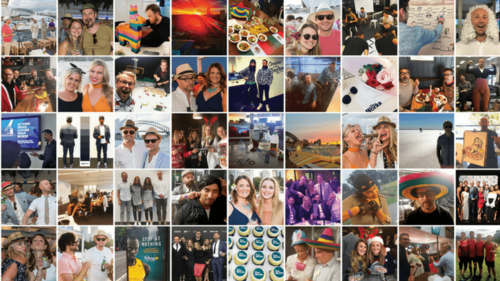
Check out some of The Works social events:
The Works famously provides funds for child care to assist returning parents, are there any other initiatives you have that assists in minimising the loss of talent at the senior end?

For our senior team we offer training opportunities that reflects the growth path of their careers, whether that be leadership training or attending conferences such as SxSW. We also do bi-annual succession planning and provide accelerated progression paths into leadership roles for our top talent. In terms of benefits, we offer additional leave in line with tenure and are open to sabbaticals for those who want to take some time out to travel or focus on a passion project. 


Thank you to The Works for another excellent award entry, check out what was discussed in last years’ interview.
By Brianna P August 2, 2026
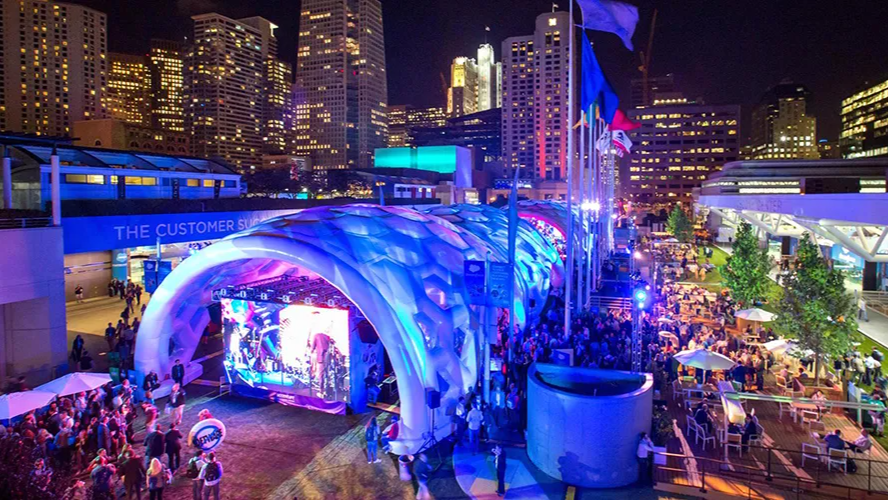
If you looked at the Australian marketing landscape back in 2019, you would have seen an experiential and live events sector at the absolute top of its game. It was a thriving, high-energy market contributing over $35.7 billion in direct economic expenditure. Brands were heavily investing in the physical world because consumers were actively prioritising real-world experiences over material things. Then, almost overnight, the music stopped.  The Dark Days of Covid When the pandemic hit in early 2020, the experiential sector didn't just slow down, it faced a total shutdown. Public health mandates meant that a staggering 96% of all scheduled live events and corporate activations were instantly cancelled or postponed. For the people we worked with in this sector, it was catastrophic. The industry suffered a near 100% loss of immediate revenue over the first year of restrictions. More than 92,000 passionate event, experiential professionals, creatives, and specialists lost their jobs in a matter of months. Marketing budgets rapidly moved online, accelerating a massive digital shift as brands aimed to capture people scrolling in lockdown. For nearly two years, the industry was on life support, leading many to wonder if consumer habits had changed permanently. A Very Crowded Internet As the world reopened, brands poured historic levels of investment into digital channels. But a new problem emerged, digital fatigue and overwhelm. With the sudden explosion of automated, AI-generated content, the internet has become incredibly crowded. The cost to acquire a customer online has skyrocketed, while actual consumer attention spans have plummeted. Digital ads have now started to yield less return because they lack one crucial element, authenticity. The Resurgence of Human Interaction Back to the present day in 2026, where the experiential and events market is relishing in one of the most remarkable industry comebacks in Australian history. The live events and experiential sectors have roared back to reach a massive valuation of AUD $27.7 billion today. The Proof In Is The People 2026 live events are experiencing record breaking numbers... When it comes to in person events today, Australians aren't just showing up, they are breaking all-time attendance records. The Australian Open 2026: The tournament completely shattered its previous attendance milestones, drawing a record-breaking 1.368 million fans to Melbourne Park. Beyond the tennis, brands capitalised heavily with major physical activations, live music events, and pop-up dining footprints that relied entirely on face-to-face consumer engagement. AFL Gather Round 2026: Down in South Australia, the event proved that live sporting culture is a massive driver for the physical economy, welcoming a record 270,018 fans across the weekend. Off-field partner activations saw well over 100,000 people flocking to physical sites like the Macca's Footy Festival at Elder Park. B2B Trade Expos: It isn’t just consumer entertainment seeing a boom. The Australian Automotive Aftermarket Expo drew 15,000 attendees to Melbourne, making it the largest automotive trade event ever held in the Southern Hemisphere. Meanwhile, the national ENTECH Roadshow saw visitor registrations climb by 27% , with exhibitors reporting that physical, face-to-face interaction was the primary driver for closing high-value commercial deals. People Want Real Experiences The commercial hook of experiential marketing today is its complete immunity to digital automation. While software can easily optimise an online ad account, it cannot replicate the tangible elements of human presence. The sector's growth is no longer just about throwing a launch party or sampling, it has matured into a commercial heavyweight. At $27.7 billion, Australia's experiential market size is now nearly as large as the country's entire paid advertising market ($31.1 billion). Recruiting for the Continued Growth of Experiential This incredible comeback story is inspiring to say the least. Experiential is here to stay, back bigger than ever, and we here at iknowho are delighted. Is your team structured to capture the value of the physical economy? Get in touch with the specialist recruitment team at iknowho today to discuss benchmarking your team structure and securing the talent needed to drive your experiential strategy forward.
By Brianna P August 2, 2026
When Marketing Week recently dropped the news that the gender pay gap in the US and UK marketing sectors had stretched to a five-year high of 16.5%, it sent a bit of a collective shiver through us all at iknowho. But rather than looking at these overseas headlines and feeling a sense of doom and gloom, we see them as an incredibly valuable heads-up. It’s a warning signal, and if we are consciously aware of the risks, we can work to sustain gender equality within the marketing and advertising industries as they continue to evolve.  Where the Australian Market Stands Right now, the latest local salary data across SEEK and Glassdoor helps us to understand the stage of the economic cycle we are in. It will be no shock that this year given rising interest rates and additional economic influences, marketing and advertising salaries have largely flatlined. Standard benchmarks for core roles like Digital Marketing Specialists sitting around $90,000–$100,000 and Marketing Managers spanning $110,000–$140,000 are holding steady rather than climbing. In fact, data shows that roughly 40% of local businesses are understandably navigating tight budget constraints this year So while there's still room for improvement, the good news is we have a window now to take action. While pay rises are on hold as the industry recalibrates, it creates the perfect opportunity to review the current metrics and plan for the next phase of growth. The AI Factor: Training For All A major reason for the pay gap resurgence in the US is the rapid, unstructured rollout of AI. Candidates able to execute advanced data, automation, and tech-driven marketing are commanding a premium, often giving candidates an immediate 6% boost to their base salaries. Thats not to say everyone will need to be an AI specialist to advance, but to ensure equality, business owners have an opportunity to be deliberate about how we upskill our teams. Instead of letting tech adoption happen organically in siloes, we can use this moment to democratise education. If we ensure our female mid-weight and senior marketers are given the exact same access, mentorship, time, and encouragement to learn about and feel comfortable with AI strategy, we don't just protect them from wage stagnation, we actively propel them into those high-value, future-proof strategic roles. The Proactive Action Plan for Aussie Leaders Fixing a pay gap doesn't require a radical financial overhaul overnight. It starts with small, highly empathetic, and transparent leadership choices. If you want to ensure your business is maintaining gender pay equality, here is your proactive checklist: Audit the "hidden" pay: WGEA's recent metrics show that base salaries are actually becoming much fairer. The real disparity often hides in discretionary pay, like performance bonuses, allowances, and sign-on perks. Take an evening to map out your bonus structures and ensure they are tied to objective, transparent metrics rather than subjective negotiations. Build the "protected hours" upskilling model: Introduce structured AI and tech training that happens during work hours, rather than expecting employees to figure it out in their spare time. This ensures that team members with caring responsibilities or heavy workloads have equal space to capture that 6% technical market premium. Open the promotion pipeline: Because the external hiring market is moving at a calmer pace, look deeply at your internal talent. Ensure the pool of people being tapped for high-visibility client pitches or digital transformation projects reflects the diverse makeup of your broader team. At iknowho , we genuinely believe that the future of Australian marketing is incredibly bright. By taking the lessons from the US and UK and turning them into proactive internal policies, we can build an industry that doesn't just talk about equality, but actively lives it. If you would like to understand more about how you can build a progressive marketing team, iknowho are always here to share insights and help you benchmark your strategy.
By Brianna P August 2, 2026
Most marketers know their resume matters, but what about your LinkedIn profile...
more posts